Understanding when to buy, where to find legitimate deals, how to maximize rewards programs, and which strategies deliver genuine value versus marketing gimmicks separates savvy beauty consumers from those paying premium prices unnecessarily. This guide reveals insider strategies used by beauty editors, makeup artists, and skincare enthusiasts to access professional-grade products at accessible prices while ensuring authenticity and quality.
Top 10 Best Beauty Deal Strategies
Sephora Rouge Rewards – Best for frequent prestige beauty buyers maximizing loyalty benefits
Ulta Diamond Status – Best for combining drugstore and prestige brands with generous rewards
Dermstore Sale + Coupon Stacking – Best for professional-grade skincare at strategic discounts
Costco Beauty Section – Best for bulk purchases of authentic luxury brands
Nordstrom Anniversary Sale Beauty – Best for annual prestige beauty stockpiling opportunity
Sephora Sale Section + Points – Best for clearance shopping with rewards redemption
Beauty Subscription Boxes – Best for discovering products before full-size investment
Brand Direct Sales (Email Lists) – Best for exclusive access to brand-specific promotions
Gilt Beauty Flash Sales – Best for designer fragrance and luxury skincare deals
Amazon Subscribe & Save Beauty – Best for automated restocking of staple products
Methodology
Our evaluation assessed beauty deal strategies across six critical criteria to identify approaches delivering maximum value:
Savings Potential: Average discount percentage versus retail pricing, frequency of promotional opportunities, stackability with other offers, and lifetime value for regular purchasers versus one-time savings.
Product Authenticity: Verification of genuine products from authorized sellers, protection against counterfeits and expired inventory, brand authorization status, and refund/replacement policies for quality issues.
Selection Quality: Range of brands from drugstore to luxury, product category breadth (makeup, skincare, haircare, fragrance), availability of cult favorites and new launches, and access to professional-grade formulations.
Reward Structure: Earning rates on purchases, redemption flexibility and value, additional member benefits (free shipping, birthday gifts, early access), and long-term loyalty program advantages.
Ease of Implementation: Time investment required to access savings, complexity of program rules and restrictions, user interface quality for online and mobile shopping, and accessibility for various budget levels.
Expert Validation: Endorsements from beauty editors and professionals, verified customer satisfaction across review platforms, longevity and reliability of programs, and transparency in pricing and promotional terms.
Detailed Reviews
1. Sephora Rouge Rewards
Best for: Beauty enthusiasts spending $1,000+ annually on prestige makeup and skincare seeking maximum loyalty benefits
Pricing: Free loyalty program with three tiers based on annual spending: Insider ($0-$349), VIB ($350-$999), Rouge ($1,000+)
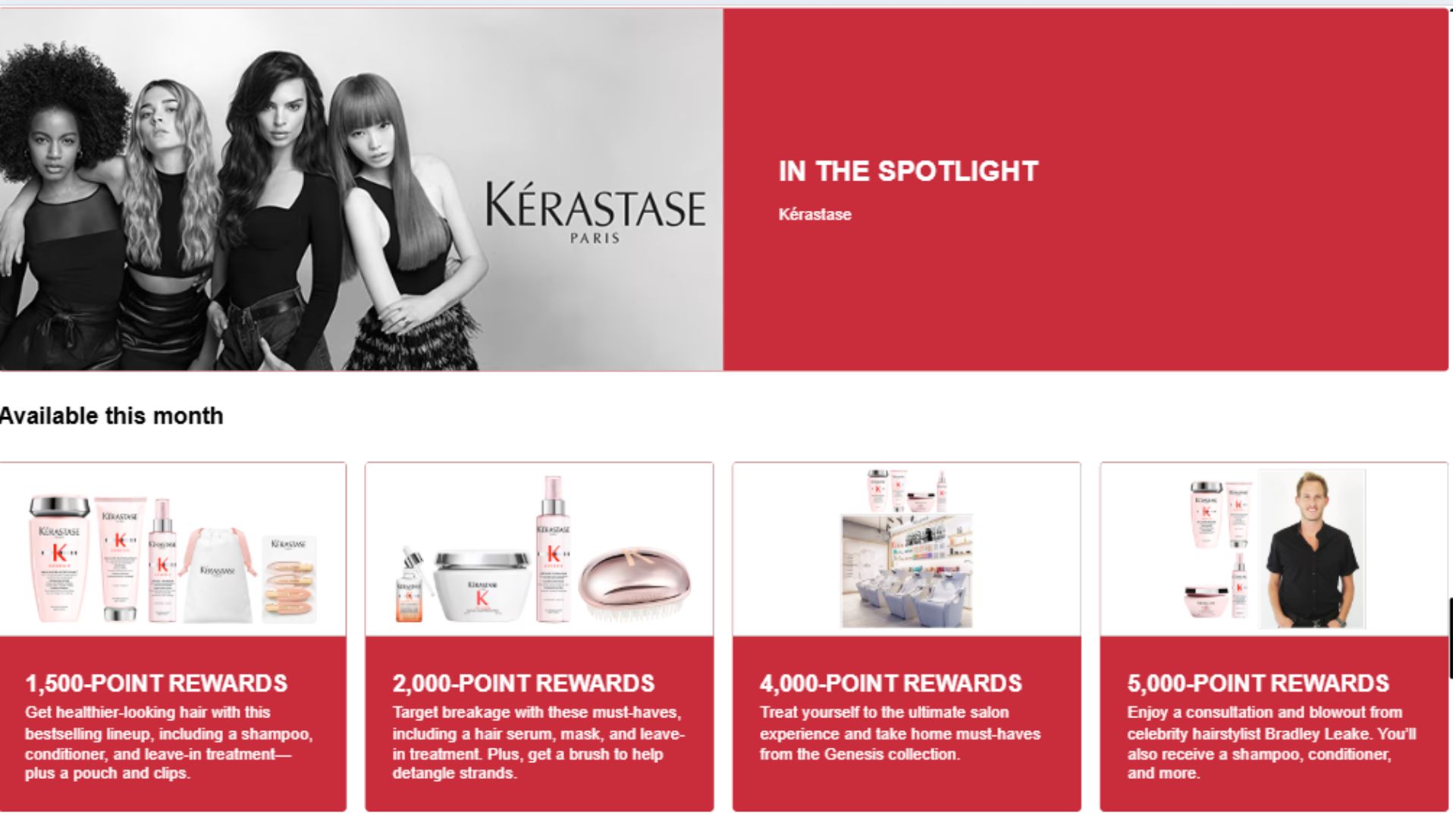
Key Features: Sephora's Beauty Insider program operates on a three-tier structure where higher annual spending unlocks superior benefits. Rouge status ($1,000+ annually) provides the most compelling value proposition: 20% off during bi-annual VIB Sales (spring and fall), free two-day shipping with no minimum purchase, early access to product launches, exclusive access to Rouge Rewards Bazaar (redeeming points for experiences and limited products), and birthday gifts with significantly better value than lower tiers. The points system awards 1 point per dollar spent, redeemable for deluxe samples (100-500 points), cash-equivalent discounts (500 points = $10 off), or exclusive products and experiences.
What distinguishes Sephora Rouge from competitor programs is the combination of predictable major sales events with luxury brand participation. Most prestige beauty brands (Charlotte Tilbury, Drunk Elephant, Tatcha, SK-II) prohibit retailers from running promotions, making the VIB Sale one of few opportunities to purchase these products below retail. For Rouge members, the 20% discount on a $1,000 annual purchase creates $200 in savings—already doubling the spending threshold's effective cost. Additional benefits include unlimited complimentary custom makeovers (typically $50+ value), access to private shopping events, and the Sephora Beauty Insider Credit Card offering 4% back on Sephora purchases plus 1% elsewhere.
Pros:
VIB Sale 20% discount applies to nearly all prestige brands rarely discounted elsewhere
Point redemption offers genuine value with strategic use (cash discounts or exclusive products)
Free fast shipping eliminates order minimums encouraging optimal timing of purchases
Early access to product launches benefits collectors and trend-followers
Birthday gifts for Rouge members significantly more generous than lower tiers
Cons:
Requires $1,000 annual spending threshold to access best benefits
Points expire after 18 months of account inactivity (purchasing or redeeming)
Some limitations during VIB Sale (certain brands and new launches excluded)
Point redemption value debatable compared to cash-back programs
Rouge renewal based on calendar year discourages new member sign-ups mid-year
2. Ulta Diamond Status
Best for: Shoppers preferring one-stop access to both drugstore and prestige brands with industry-leading rewards earning rate
Pricing: Free Ultamate Rewards program with spending-based tiers: Member ($0-$499), Platinum ($500+), Diamond ($1,200+)
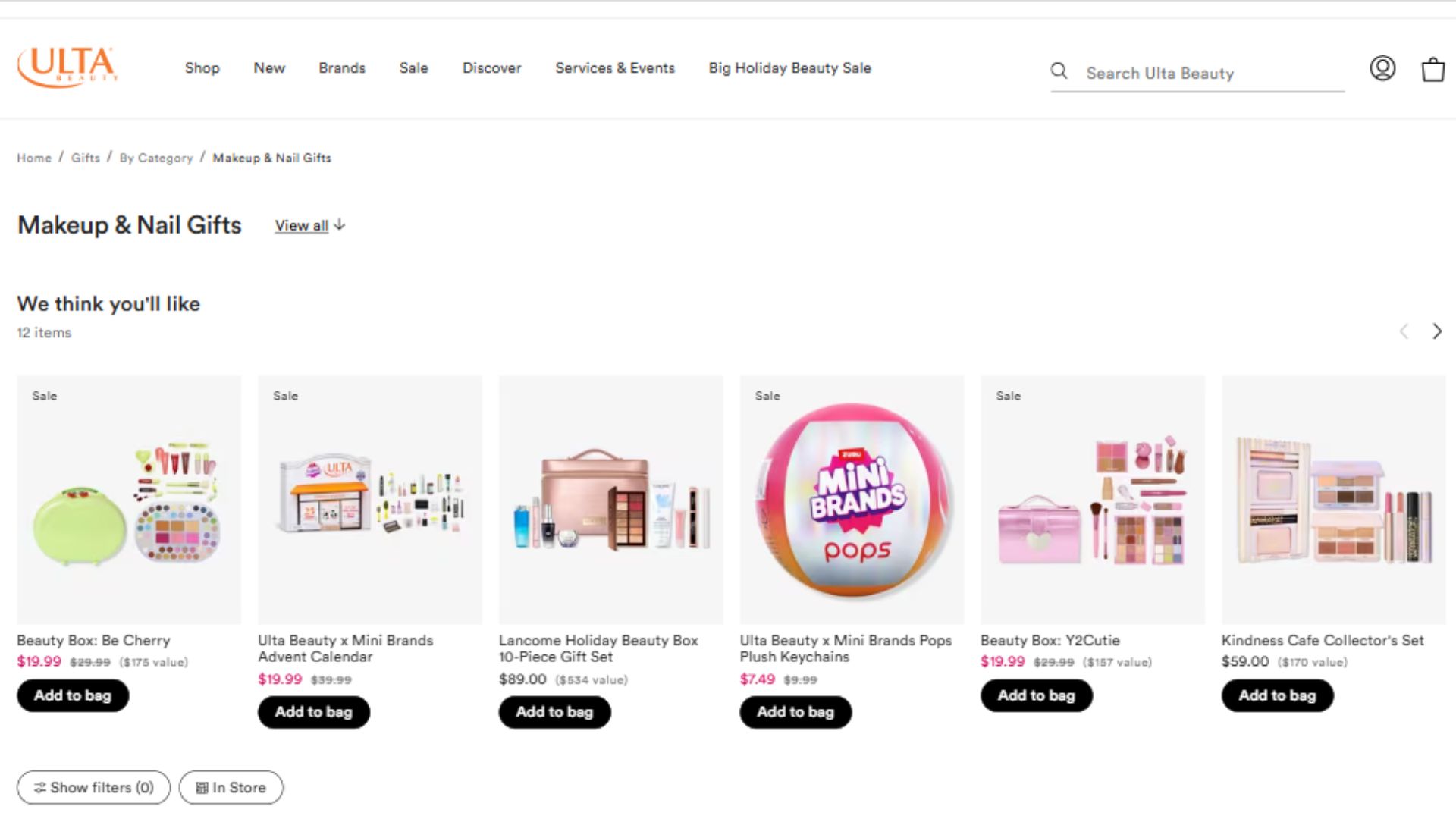
Key Features: Ulta's Ultamate Rewards program delivers exceptional value through a straightforward points system: base members earn 1 point per dollar, Platinum members (spending $500+ annually) earn 1.25 points per dollar, and Diamond members (spending $1,200+ annually) earn 1.5 points per dollar. Points convert directly to cash discounts at 1 point = $0.01 value, redeemable in increments of 100 points ($3 off) up to 2,000 points ($125 off). The program's genius lies in frequent "multiplier events" where earning rates increase to 5x, 10x, or occasionally 20x points on specific brands or categories, dramatically accelerating rewards accumulation.
Ulta's combination of drugstore brands (CeraVe, NYX, Maybelline) and prestige lines (Lancôme, Clinique, MAC) under one rewards program provides flexibility impossible at Sephora or department stores. Diamond members receive 1.5 points on all purchases—effectively 1.5% back—but strategic shopping during multiplier events yields 7.5-15% back on selected items. Additional Diamond benefits include free standard shipping (no minimum), birthday gifts during birth month (choice of multiple options), and exclusive promotional access. The Ulta credit card increases base earning to 2 points per dollar (or 3 points for Diamond cardholders), with bonus points at restaurants and gas stations.
Pros:
Points redeem as direct cash discounts with transparent value (no confusing conversion)
Multiplier events create opportunities for 10-20% effective cash back
Combination of drugstore and prestige brands maximizes single-program value
Diamond tier threshold ($1,200) achievable for moderate beauty enthusiasts
Flexible redemption with no blackout dates or restrictions
Cons:
Points expire after 12 months if no earning or spending activity (stricter than Sephora)
Prestige brand selection smaller than Sephora's luxury focus
Multiplier events require active monitoring and strategic timing
No discount events comparable to Sephora's VIB Sale
In-store experience varies significantly by location quality
3. Dermstore Sale + Coupon Stacking
Best for: Skincare enthusiasts prioritizing professional-grade dermatologist-recommended brands at strategic price points
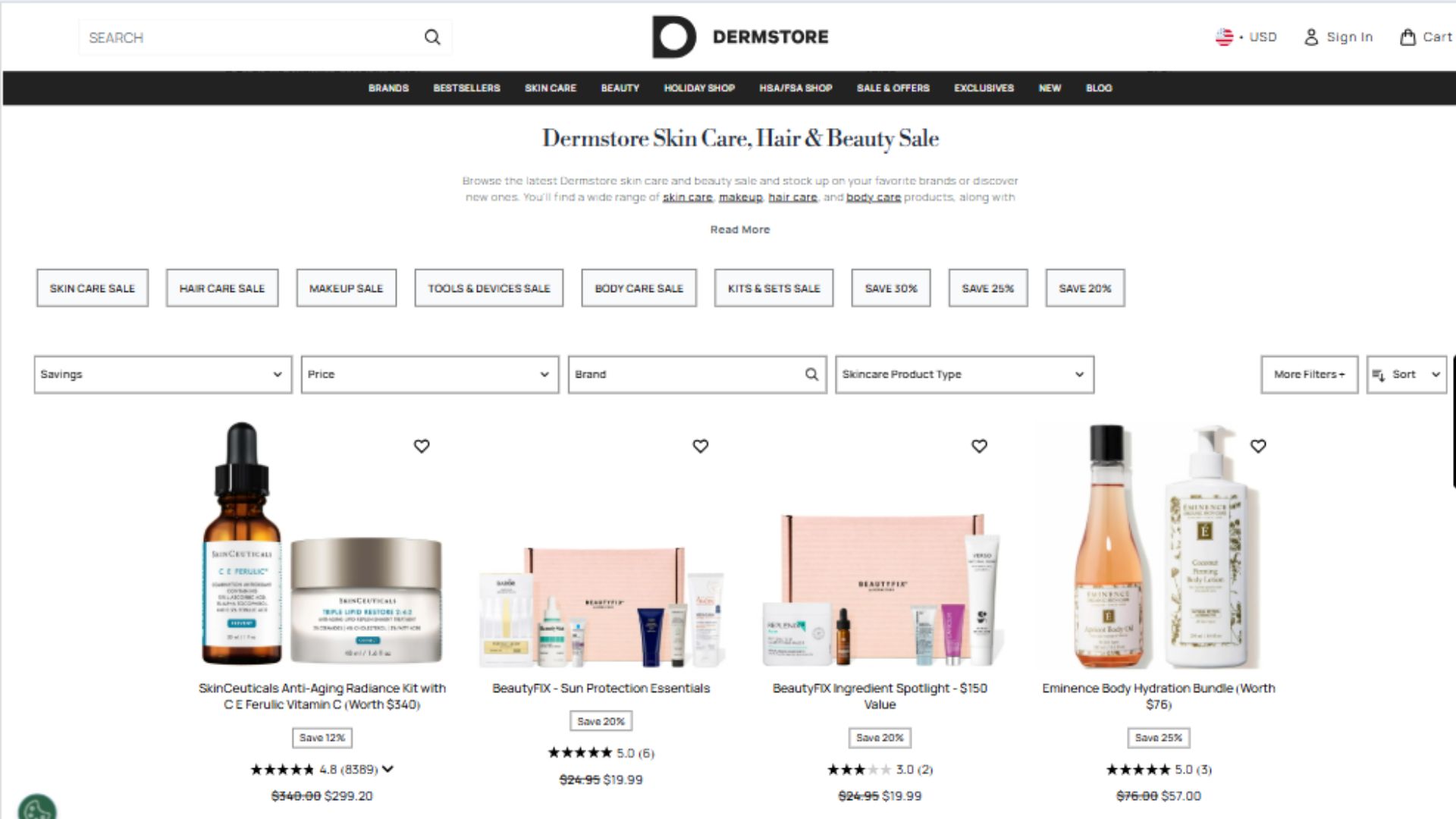
Pricing: Regular prices competitive with Sephora/Ulta; stacking sales (20-25% off) with coupon codes (additional 10-20% off) yields 30-40% total savings
Key Features: Dermstore specializes in dermatologist-approved and professional-grade skincare from brands like SkinCeuticals, Obagi, EltaMD, Drunk Elephant, and The Ordinary. The platform runs frequent sitewide sales (typically 20-25% off most brands) coinciding with seasonal changes, holidays, and beauty events. The insider strategy involves combining these sales with email-exclusive coupon codes (additional 10-20% off) that stack on top of sale prices. Savvy shoppers subscribe to Dermstore's email list, wait for sitewide sales, then apply the best available coupon code at checkout for compound savings reaching 30-40% on premium skincare.
Dermstore's Auto-Replenish subscription program provides additional ongoing value: 15% off regular prices plus free shipping on automated deliveries of skincare staples. The platform guarantees authenticity as an authorized retailer for all carried brands—critical for skincare where counterfeits and expired products plague unauthorized sellers. Dermstore's licensed aestheticians staff customer service lines providing genuine expertise for product selection and routine development rather than just processing orders. The "Skin Store" rewards program earns 5% back in store credit on all purchases, stackable with sales and subscriptions for maximum savings.
Pros:
Stacking sales and coupons creates 30-40% savings on professional skincare
Guaranteed authenticity from authorized retailer eliminates counterfeit concerns
Auto-Replenish 15% discount maintains ongoing savings on routine products
Expert customer service from licensed aestheticians adds consultation value
Rewards program 5% back stacks with other discounts
Cons:
Best savings require patient timing around promotional periods
Some premium brands occasionally excluded from stacking promotions
Auto-Replenish subscriptions require active management to avoid overstock
Limited makeup selection compared to full-service beauty retailers
Email marketing volume can overwhelm inboxes without filtering
4. Costco Beauty Section
Best for: Bulk purchases of authentic luxury brands at 20-40% below retail without waiting for sales
Pricing: $60-$120 annual membership; beauty products typically 20-40% below retail pricing
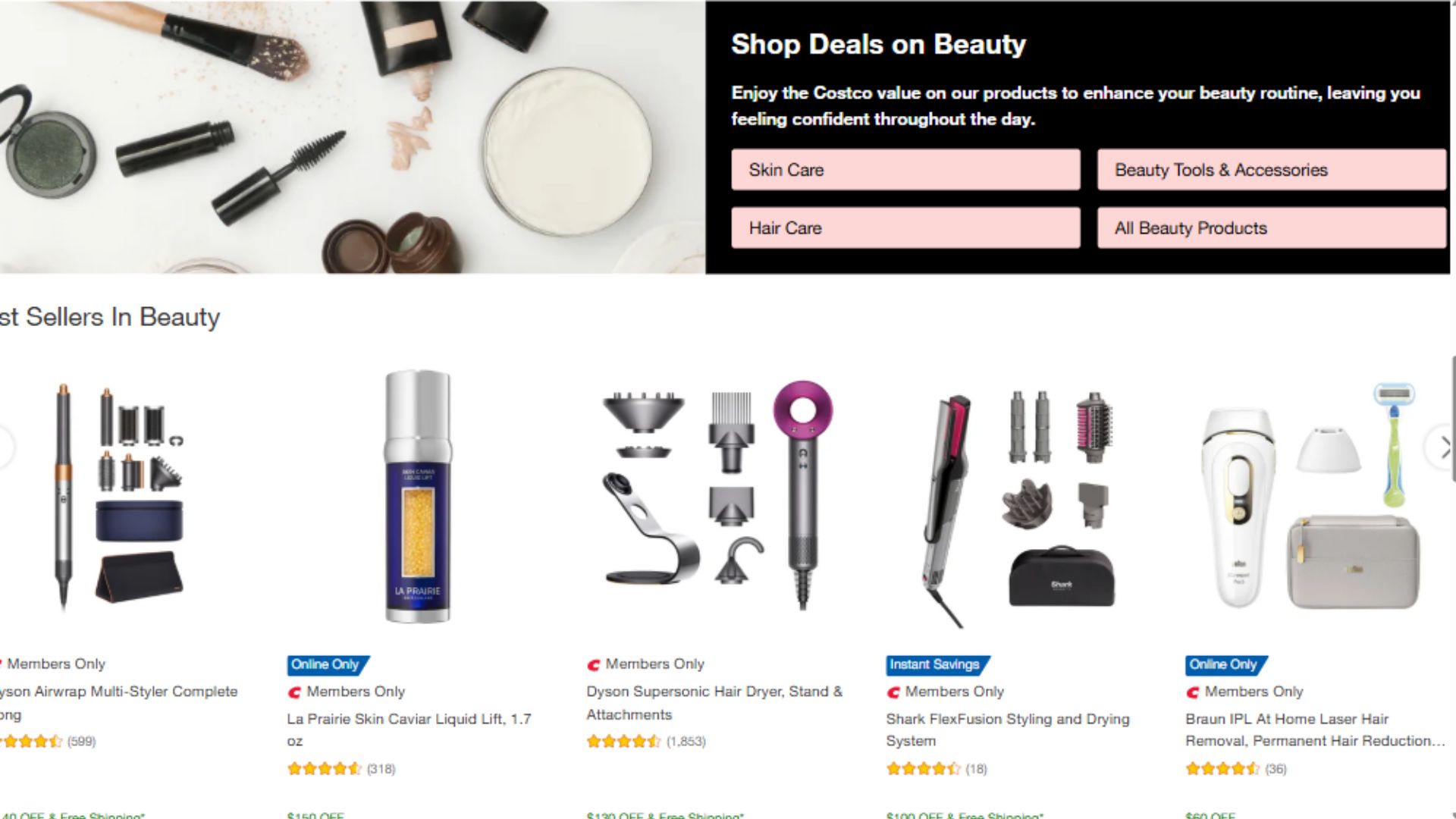
Key Features: Costco's beauty section offers unexpected access to luxury and prestige brands at warehouse club pricing. The inventory rotates but frequently includes brands like La Mer, SK-II, Lancôme, Estée Lauder, and premium fragrances from designers like Chanel, Dior, and Tom Ford—all authenticated and sourced directly from brands or authorized distributors. Pricing typically runs 20-40% below department store retail with no waiting for sales or limited-time promotions. The catch is inventory unpredictability and large package sizes: you might find SK-II Facial Treatment Essence in twin-packs or La Mer Crème de la Mer in super-sized jars, requiring upfront investment but yielding substantial per-ounce savings.
Costco's reputation and buying power ensure product authenticity—major brands sell to Costco because the volume and cash-on-delivery terms are attractive, while Costco's quality standards and customer-friendly return policy protect buyers. The unlimited return policy famously accepts beauty returns even after use if unsatisfied, though ethical shoppers reserve this for genuine product issues. For skincare devotees committed to specific luxury brands, Costco provides consistent savings without the timing game required at traditional retailers. The key is checking both in-warehouse (where beauty products are often locked in cases near pharmacy) and Costco.com, which stocks items not available in all physical locations.
Pros:
Luxury beauty products consistently 20-40% below retail without waiting for sales
Guaranteed authentic products from authorized channels
Generous return policy eliminates risk from purchasing unfamiliar products
Large sizes reduce per-ounce cost and purchase frequency
No loyalty tier requirements or minimum spending thresholds
Cons:
Requires annual membership fee ($60-$120) to access
Inventory unpredictable—can't count on specific products being available
Large package sizes demand storage space and upfront capital
Beauty selection varies significantly between warehouse locations
Limited selection compared to dedicated beauty retailers
5. Nordstrom Anniversary Sale Beauty
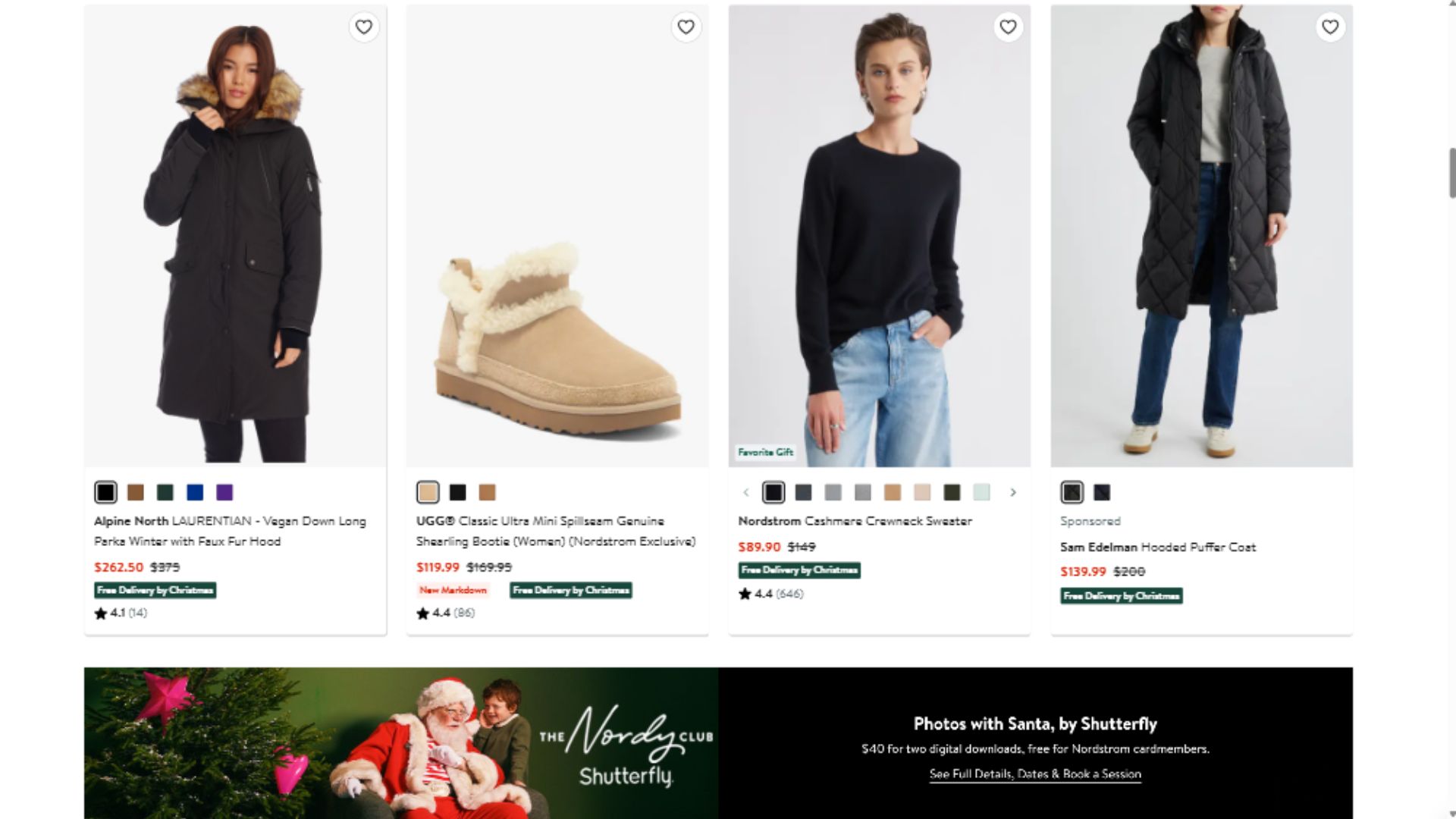
Best for: Annual stockpiling opportunity when prestige beauty brands offer exclusive sets and limited editions at significant savings
Pricing: No membership required; beauty exclusives typically 20-40% off retail value during July/August sale event
Key Features: The Nordstrom Anniversary Sale, occurring annually in July-August with early access for cardmembers, represents one of beauty's most significant savings events. Unlike typical sales clearing old inventory, Anniversary Sale features exclusive beauty sets created specifically for the event by prestige brands—think Charlotte Tilbury curated palettes, La Mer discovery sets, Estée Lauder Advanced Night Repair bundles—packaged to deliver 20-40% more product value than retail pricing. Brands participate because Anniversary Sale drives massive volume without devaluing their regular pricing, and Nordstrom's cardmember base provides lucrative customer acquisition.
The insider strategy involves researching the beauty offerings when they're announced (typically two weeks before public sale), creating a wishlist of must-haves, and having Nordstrom credit card status for early access (opening hours or days before general public). Popular sets sell out within hours—La Mer and Charlotte Tilbury exclusives often gone by day two. The sale also includes markdowns on regular beauty inventory, though exclusive sets provide better value. Nordstrom's free shipping and returns, plus generous return policy, make Anniversary Sale lower-risk than flash sales requiring immediate commitment. For beauty enthusiasts willing to plan annual purchasing around one major event, Anniversary Sale delivers luxury products at accessible prices.
Pros:
Prestige brands create exclusive sets specifically for the event (not clearance inventory)
Value sets deliver 20-40% more product than spending equivalent retail
No membership required though cardholders get early access
Nordstrom's return policy and customer service reduce purchase risk
Annual predictability allows planning major purchases around event
Cons:
Once-yearly event limits flexibility for immediate needs
Most desirable sets sell out within hours requiring vigilant shopping
Early access requires Nordstrom credit card (or personal shopping relationship)
Sets may include shades or formulas you wouldn't select individually
Value calculations sometimes inflated by including small sample sizes
6. Sephora Sale Section + Points
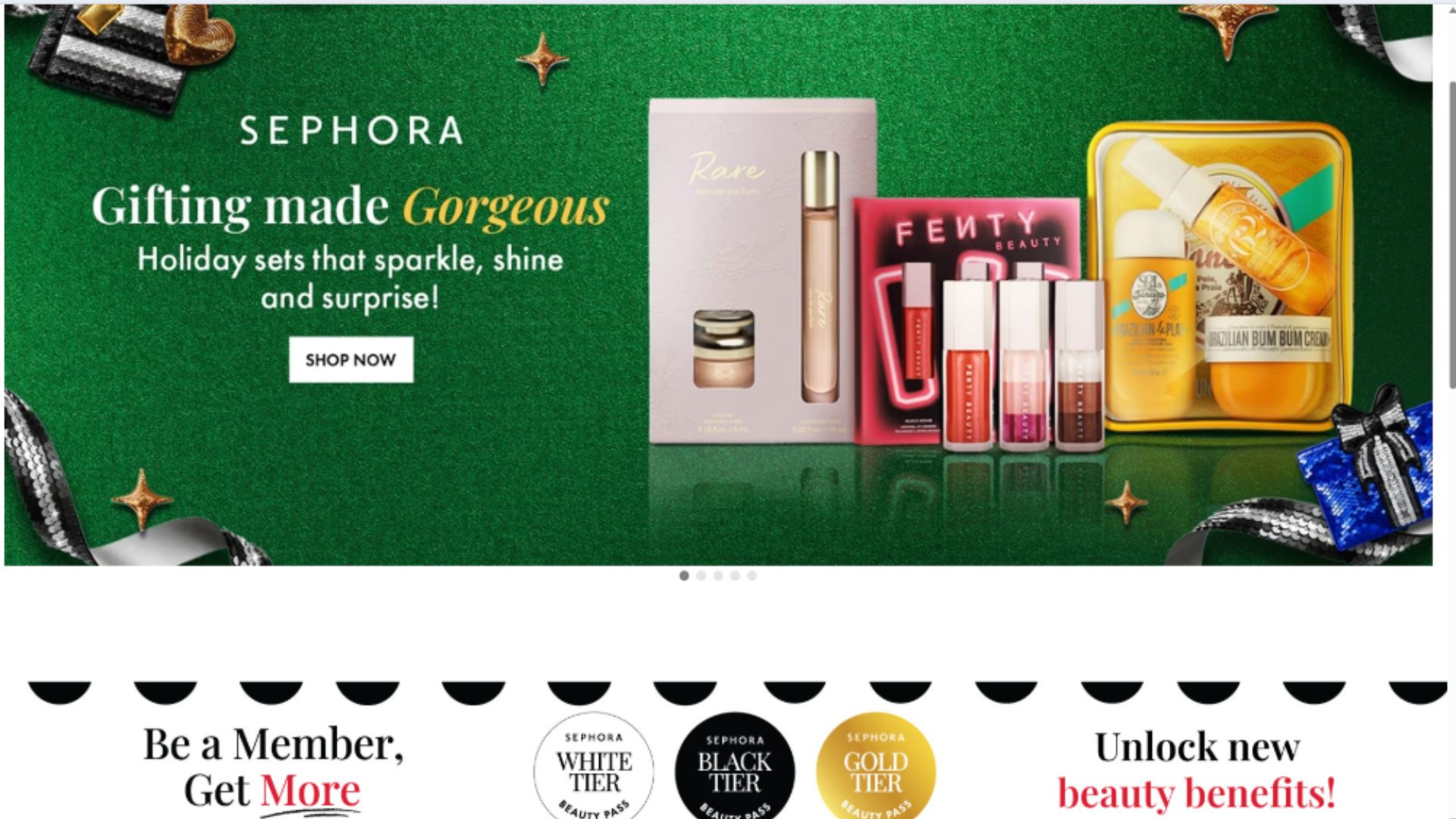
Best for: Clearance hunters combining discounted products with accumulated loyalty points for maximum savings
Pricing: Sale items typically 30-70% off retail; points provide additional $10-$100 discounts
Key Features: Sephora's sale section, while smaller than competitors', offers strategic opportunities for combining multiple savings mechanisms. The clearance inventory includes discontinued products, limited edition items being phased out, packaging changes, and seasonal overstock—typically marked 30-50% off, occasionally 70% off for aggressive clearance. The insider technique involves monitoring the sale section weekly (inventory refreshes regularly), identifying useful products at deep discounts, then applying accumulated Beauty Insider points for additional savings. Since points redeem at 500 points = $10 off (or better value through Rouge Rewards Bazaar), a $30 clearance item effectively costs $10-15 after points redemption.
The strategy particularly benefits Rouge and VIB members who accumulate points through regular full-price purchases, then redeem strategically on sale items to maximize total savings. Sephora's sale section also includes "Flash Sales"—24-48 hour promotions on specific products or categories at 20-50% off, announced via app notifications and email. These flash opportunities often feature cult products and bestsellers rather than just unwanted inventory. The limitation is sale inventory doesn't include every brand or product type consistently—you're shopping opportunistically rather than for specific items. However, for flexible shoppers open to trying new products or stocking non-urgent items, the sale section combined with points creates exceptional value.
Pros:
Deep discounts (30-70% off) on legitimate prestige beauty products
Stacking sale prices with points redemption compounds savings
Flash sales feature desirable products, not just unpopular clearance
All sale items guaranteed authentic with standard return policies
Weekly inventory refreshes provide ongoing discovery opportunities
Cons:
Limited selection compared to full inventory—can't shop specific items reliably
Most desirable sale items have limited sizes or shades available
Final sale items not returnable (clearly marked but requires attention)
Flash sales sell out rapidly, sometimes within hours
Sale section doesn't include all brands (luxury brands rarely participate)
7. Beauty Subscription Boxes
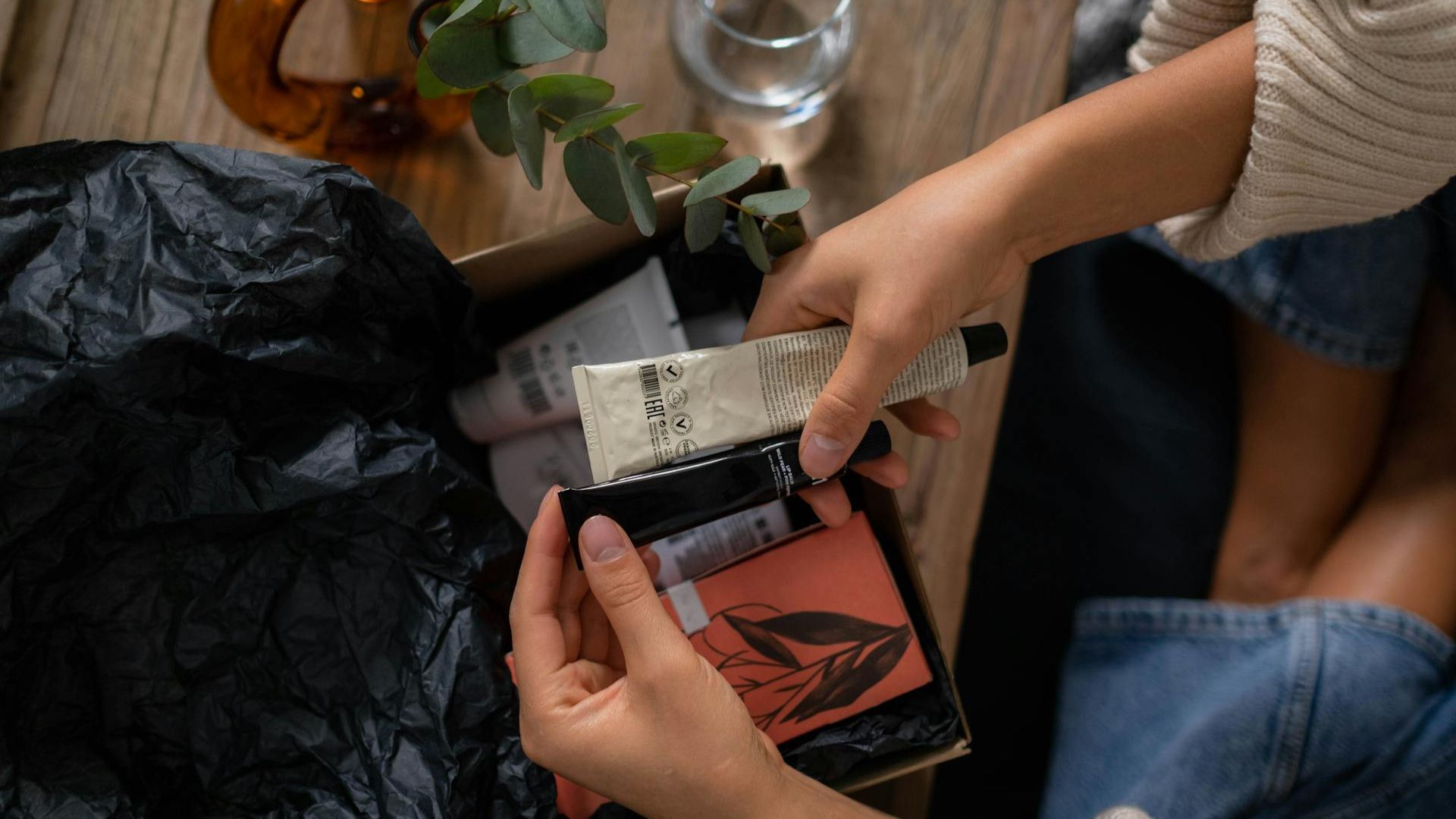
Best for: Product discovery and sampling before committing to full-size purchases, potentially saving hundreds on trial and error
Pricing: $10-$50/month depending on service; effective cost-per-product significantly below retail
Key Features: Beauty subscription boxes (Ipsy, BoxyCharm, Allure Beauty Box, Sephora Play—discontinued but similar services exist) provide curated selections of sample-size or full-size products monthly. The value proposition isn't necessarily cheaper products, but rather risk-free discovery—receiving 4-8 items per box with total retail value of $50-$150 for $10-$25 subscription cost. This allows testing formulas, shades, and brands before investing in full-size products, potentially preventing hundreds of dollars in purchasing mistakes. Subscription services also provide access to new launches and cult products subscribers might not discover independently.
The strategic approach to subscription boxes involves treating them as discovery and sampling services rather than primary beauty sources. Test products through subscriptions for 1-3 months to determine what works for your skin, coloring, and preferences, then purchase full sizes through other deal strategies (Sephora VIB Sale, Ulta multipliers, Dermstore coupons). Many subscription services allow customization—choosing specific product categories, indicating color preferences, or reviewing options before shipment. Some services (Ipsy Glam Bag Plus) include full-size products making them viable for actual product acquisition rather than just sampling. The key is calculating whether you'll genuinely use most items; if half the box gets discarded, the "deal" disappears.
Pros:
Discover new products and brands without full-size investment risk
Total product value significantly exceeds subscription cost
Prevents expensive purchasing mistakes on incompatible products
Access to new launches and cult products automatically
Sample sizes perfect for travel or testing before commitment
Cons:
Receiving unwanted products common despite customization options
Most items sample-sized requiring eventual full-size purchases
Accumulation of unused products if not strategic about usage
Subscription fatigue from recurring shipments and decision-making
Cost adds up over time if not canceling after discovery period
8. Brand Direct Sales (Email Lists)

Best for: Exclusive early access to brand-specific promotions often deeper than retailer sales
Pricing: Free to join email lists; discounts typically 15-30% off, occasionally 40-50% for major events
Key Features: Subscribing directly to beauty brands' email lists provides access to promotions often superior to retailer sales. Brands run direct-to-consumer sales for multiple reasons: capturing customer data, avoiding retailer margins, testing pricing, and clearing inventory. Email subscribers receive early notification (often 24-48 hours before public announcement) and sometimes exclusive discount codes unavailable elsewhere. Many brands offer 10-20% off for first purchases after email signup, plus birthday discounts, early access to new launches, and loyalty programs separate from Sephora/Ulta.
The strategy involves subscribing to brands you already purchase regularly rather than every beauty brand in existence. Create a dedicated email address for beauty subscriptions to prevent inbox overwhelm, and check it weekly when planning purchases. Brands like The Ordinary frequently run 23% off sitewide sales (the brand's signature discount percentage), Paula's Choice offers 20% off promotions monthly, and Tatcha provides loyal customers early access to limited editions. Some brands (Drunk Elephant, Summer Fridays) rarely discount through retailers but occasionally run direct sales for email subscribers. The combination of better discounts, exclusive access, and direct brand relationship—including better customer service and product education—makes email subscription valuable for favorite brands.
Pros:
Brand-direct discounts often deeper than retailer promotional pricing
Early access to limited editions and new launches
First-purchase discounts (typically 10-20% off) immediately reward subscription
Direct brand relationship improves customer service and product education
Birthday discounts and loyalty programs independent of retailer programs
Cons:
Email volume overwhelming without dedicated address and filtering
Must subscribe to multiple brands individually rather than one platform
Promotions unpredictable in timing compared to retailer scheduled sales
Direct purchases don't earn Sephora/Ulta loyalty points
Shipping costs can add up across multiple brand orders
9. Gilt Beauty Flash Sales
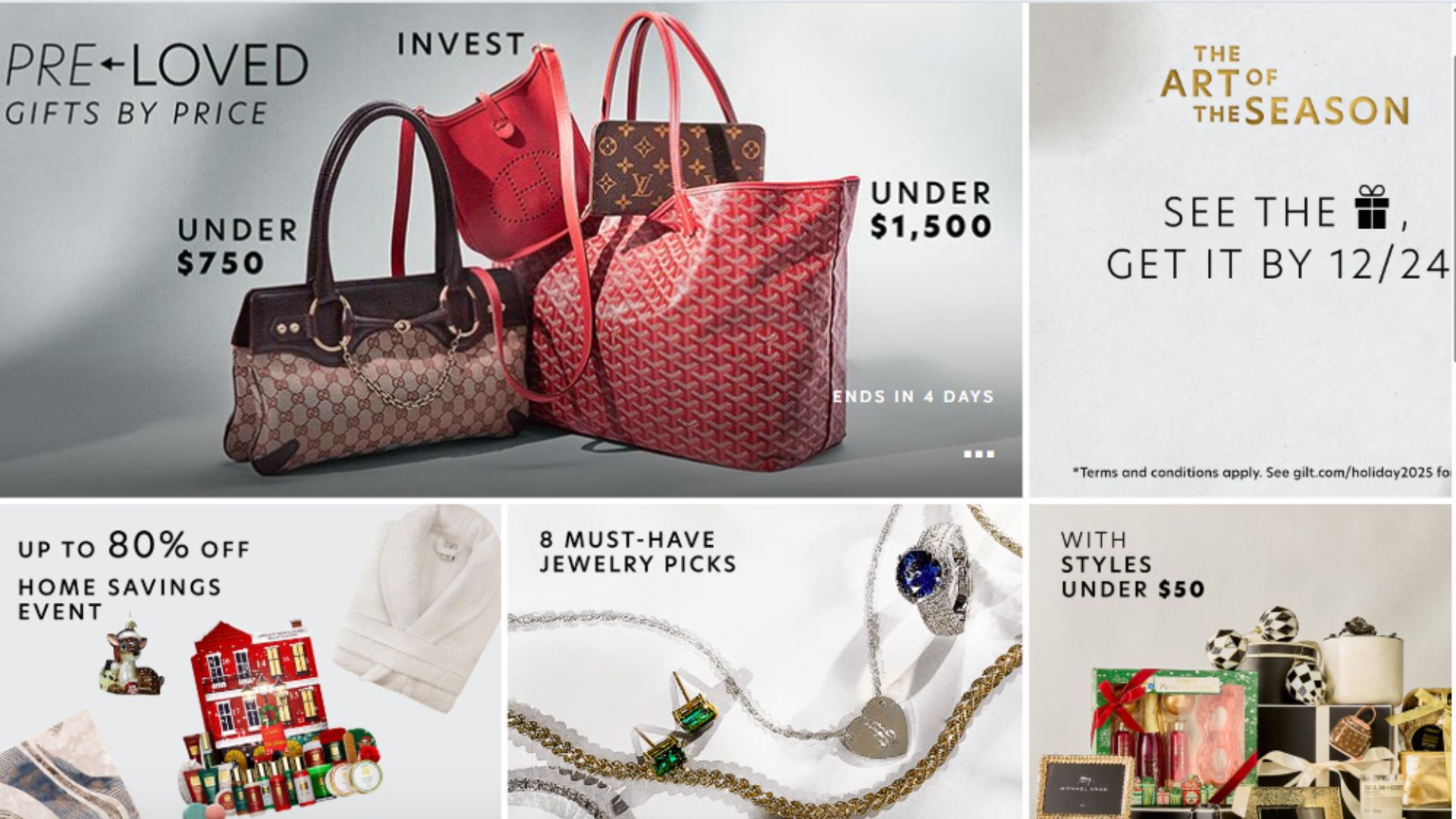
Best for: Designer fragrances and luxury skincare at 40-70% below retail during time-limited sales
Pricing: Free membership; products typically 40-70% off retail during 24-48 hour flash sales
Key Features: Gilt's beauty flash sales offer luxury and designer beauty products at significant discounts during time-limited events (typically 24-48 hours). The platform sources overstock, previous season's packaging, and specially produced inventory from prestige brands including fragrance houses (Tom Ford, Jo Malone, Creed), luxury skincare (La Prairie, Sisley, Valmont), and designer cosmetics. Discounts genuinely reach 40-70% below retail for authentic products, though selection is unpredictable and inventory limited. Sales launch at scheduled times (typically noon Eastern), with email and app notifications alerting members to relevant categories.
Gilt's value proposition shines particularly for fragrances, where luxury scents retail at $150-$400 but appear on Gilt at $60-$150. The platform also features skincare discovery opportunities—trying expensive brands like La Prairie or Sisley at prices comparable to mid-range products reduces the risk of luxury experimentation. The shopping experience requires decisiveness; popular items and common sizes sell out within hours. Gilt's curation distinguishes it from overwhelming resale platforms—products are professionally photographed and accurately described. The limitation is unpredictability—you can't shop for specific items on demand, only browse what appears in current sales. For patient shoppers willing to wait for desired categories and act quickly when opportunities arise, Gilt provides legitimate luxury beauty access.
Pros:
Authentic luxury beauty products at 40-70% below retail pricing
Particularly strong fragrance selection and savings
Professional presentation and product descriptions
Curated sales prevent overwhelming choice
Opportunity to experiment with luxury brands affordably
Cons:
Time-limited sales create pressure for immediate decisions
Most items final sale with no returns (exceptions marked)
Unpredictable inventory—can't count on finding specific products
Popular sizes and items sell out rapidly
Shipping costs ($5-$10) add to purchase price unless exceeding threshold
10. Amazon Subscribe & Save Beauty
Best for: Automated restocking of beauty staples with 5-15% discounts and free shipping
Pricing: Free service; 5% discount on individual subscriptions, 15% discount when maintaining 5+ active subscriptions
Key Features: Amazon Subscribe & Save applies to thousands of beauty products including skincare staples (CeraVe, The Ordinary, Neutrogena), haircare (Olaplex, Living Proof), and cosmetics (Maybelline, L'Oreal). The program provides automatic delivery on schedules you control (monthly, every 2-6 months, etc.) with discounts of 5% for individual subscriptions or 15% when you maintain five or more active subscriptions monthly. You can skip, reschedule, or cancel individual subscriptions anytime. The strategy involves subscribing to beauty products you consistently repurchase—moisturizers, cleansers, sunscreens, makeup removers—scheduling deliveries to match consumption rates, and maintaining enough subscriptions to unlock 15% savings.
The program's value compounds over time: 15% off regular Amazon prices for products you'd purchase anyway creates meaningful annual savings, while automation prevents running out of essentials and eliminates impulse purchases during emergency drugstore runs. The challenge is ensuring product authenticity—Amazon's marketplace includes third-party sellers offering counterfeits, expired inventory, and unauthorized versions. The solution is purchasing only items "Shipped from and sold by Amazon.com" (not third-party sellers) and verifying products are from authorized Amazon storefronts for major brands. Amazon Subscribe & Save works best for non-luxury beauty staples where counterfeiting is less problematic and where brand innovation is minimal (you're not concerned about having latest formulations).
Pros:
15% discount when maintaining 5+ subscriptions provides consistent savings
Automation ensures never running out of essential products
Complete flexibility to adjust, skip, or cancel subscriptions
Free shipping included regardless of order size
Prime members receive additional benefits and faster shipping
Cons:
Authenticity concerns require careful seller verification
Best discount requires maintaining multiple simultaneous subscriptions
Limited to products available through Subscribe & Save (not comprehensive)
Can accumulate overstock if not monitoring consumption rates
Prices sometimes higher than drugstore sales or other retailers
Comparison Summary
Savings Potential: The highest single-transaction savings come from luxury-focused strategies: Gilt flash sales (40-70% off), Costco beauty (20-40% off without waiting), and Nordstrom Anniversary Sale (20-40% value in exclusive sets). Ongoing loyalty programs provide moderate but consistent savings: Ulta Diamond (1.5% base, 7.5-15% during multipliers), Sephora Rouge (20% twice annually plus points), and Amazon Subscribe & Save (5-15% automated). Stacking strategies deliver compound savings: Dermstore sales + coupons (30-40%), Sephora sale section + points (40-70% off + additional point discounts).
Product Categories: Prestige makeup and skincare: Sephora Rouge, Nordstrom Anniversary Sale, Dermstore stacking. Drugstore and accessible brands: Ulta Diamond, Amazon Subscribe & Save. Luxury skincare: Costco, Gilt, Dermstore sales. Designer fragrances: Gilt, Costco. Discovery and sampling: Beauty subscription boxes, Sephora sale section. Professional-grade skincare: Dermstore, brand direct sales.
Time Commitment: Lowest effort: Amazon Subscribe & Save (automated), Costco (shop occasionally). Moderate effort: Loyalty programs requiring membership but simple shopping (Sephora, Ulta). Higher effort: Sale monitoring and strategic timing (Dermstore stacking, Nordstrom Anniversary Sale, Gilt flash sales, brand email promotions). Ongoing commitment: Subscription boxes (monthly curation and decision-making).
Best Use Cases:
Frequent prestige beauty buyers ($1,000+ annually): Sephora Rouge + Dermstore stacking
Mass and prestige combination shoppers: Ulta Diamond + brand direct sales
Luxury skincare enthusiasts: Costco + Gilt + Nordstrom Anniversary Sale
Bargain hunters with flexibility: Sephora sale section + points + subscription boxes
Staple repurchasers seeking automation: Amazon Subscribe & Save + brand subscriptions
Discovery and experimentation focus: Subscription boxes + sale sections + sample programs
Buying Guide
Who Needs Beauty Deal Strategies?
Regular Beauty Purchasers: Anyone spending $500+ annually on makeup and skincare benefits meaningfully from strategic deal shopping. A household spending $100 monthly on beauty products saves $360-$1,200 annually by implementing loyalty programs and strategic timing versus casual retail shopping.
Prestige Brand Devotees: Shoppers committed to luxury skincare and makeup see the highest percentage savings through strategic approaches. La Mer customers saving 30% through Costco or Nordstrom Anniversary Sale create $150-$300 savings per product versus department store retail.
Product Experimenters: Beauty enthusiasts who try new products frequently benefit enormously from subscription boxes and sample programs, preventing hundreds of dollars in full-size purchasing mistakes.
Budget-Conscious Quality Seekers: Shoppers wanting effective products at accessible prices maximize value through drugstore brand shopping at Ulta (leveraging multiplier events), Amazon Subscribe & Save, and brand-direct promotions.
How Beauty Deal Strategies Work
Loyalty Programs: Earn points or rewards on purchases, typically 1-1.5% base rate with opportunities for multipliers. Points redeem for discounts, products, or perks. Higher spending tiers unlock superior benefits including percentage-off sales, free shipping, and exclusive access.
Strategic Timing: Major retailers and brands run predictable promotional cycles: Sephora VIB Sale (April and November), Nordstrom Anniversary Sale (July-August), Black Friday/Cyber Monday (November), post-holiday clearance (January). Planning major purchases around these events creates 20-40% savings.
Stacking Mechanisms: Combine multiple discount types for compound savings: base sale price + coupon code + cashback portal + loyalty points. Example: 20% Dermstore sale + 15% email coupon + 5% rewards = 37% total savings before cashback.
Subscription Models: Automated delivery programs (Subscribe & Save, brand subscriptions, beauty boxes) provide convenience plus discounts (5-15%) for commitment. Works best for consistent repurchase items where consumption is predictable.
Wholesale and Flash Sales: Costco leverages buying power for everyday discounts; Gilt negotiates surplus inventory for time-limited deals. Both provide authentic luxury products at significant savings with trade-offs in selection and urgency.
Key Features to Consider
For Loyalty Program Selection:
Earning rate: How quickly rewards accumulate relative to spending
Redemption value: Actual cash equivalent of points/rewards
Spending threshold: Annual purchase level required for top-tier benefits
Brand alignment: Whether program covers brands you actually purchase
Perks beyond discounts: Free shipping, birthday gifts, early access, customer service
For Timing Strategies:
Sale predictability: Annual events (Anniversary Sale) versus sporadic promotions
Brand participation: Which luxury brands actually discount during sales
Exclusions and limitations: New launches, certain brands, or product categories restricted
Inventory depth: Whether desirable items are actually available or sell out immediately
For Deal Platforms:
Authenticity verification: How platform ensures genuine products versus counterfeits
Return policies: Flexibility to return products if unsatisfactory or wrong
Selection breadth: Range of brands and products available
User experience: Website/app quality, search functionality, checkout simplicity
Hidden costs: Membership fees, shipping costs, minimum purchases
Pricing Overview
Average Annual Savings by Strategy
Sephora Rouge Program (for $1,500 annual spender):
VIB Sale 20% discount twice annually on $750 each time: $300 savings
Points accumulation (1,500 points = $30+ value): $30 savings
Free shipping value (assuming $10 per order, 6 orders annually): $60 savings
Total annual benefit: $390 (26% effective savings rate)
Ulta Diamond Status (for $1,500 annual spender):
Base 1.5% earning: $22.50 cash back
Strategic multiplier event shopping (10x on $750, 5x on $750): $93.75 additional
Birthday month discount and gifts: $20-$50 value
Total annual benefit: $136-$166 (9-11% effective savings rate)
Dermstore Sale + Coupon Stacking (for $800 annual skincare spending):
Strategic timing of purchases during 25% sales with 15% stacking coupons: $288 savings
Auto-Replenish 15% on $400 of staples: $60 savings
Rewards program 5% back: $40 cash back
Total annual benefit: $388 (48% effective savings rate)
Costco Beauty Purchases (for $600 annual luxury skincare spending):
Average 30% below retail: $180 savings
Membership cost: -$60
Net annual benefit: $120 (20% effective net savings rate)
Combined Strategies (for $2,000 annual beauty spending): Many consumers benefit from implementing multiple complementary strategies:
Prestige makeup via Sephora Rouge: $500 spending, $130 savings (26%)
Professional skincare via Dermstore: $600 spending, $288 savings (48%)
Luxury additions via Costco/Gilt: $400 spending, $140 savings (35%)
Drugstore staples via Amazon Subscribe & Save: $500 spending, $75 savings (15%)
Total savings: $633 on $2,000 spending (32% overall savings rate)
Membership Investment Decisions
Sephora Rouge ($1,000 annual spending threshold):
Break-even at approximately $750 in annual purchases (assuming 20% VIB Sale savings twice)
Optimal for spending $1,000-$3,000 annually on prestige beauty
Beyond $3,000, diminishing returns unless heavily using perks
Ulta Diamond ($1,200 annual spending threshold):
Break-even at approximately $600 in annual purchases (leveraging multipliers strategically)
Optimal for spending $800-$2,500 annually combining drugstore and prestige
Particularly valuable for shoppers who monitor promotions actively
Costco Membership ($60-$120 annual fee):
Beauty-only break-even at approximately $200-$400 in annual luxury purchases (assuming 30% savings)
More justifiable when leveraging membership across household categories
Optimal for buyers of luxury skincare, fragrances, or haircare staples
Frequently Asked Questions
How can I tell if beauty products on discount sites are authentic and not counterfeit or expired?
Authenticity verification requires checking several factors: (1) Purchase only from authorized retailers—brands publish lists on their websites of approved sellers; (2) Verify the seller's authorization—Sephora, Ulta, Dermstore, Nordstrom, and direct brand sites are always authorized; (3) For Amazon, buy only items "shipped from and sold by Amazon.com" or from official brand storefronts; (4) For Costco, the company's reputation and supplier relationships guarantee authenticity; (5) For Gilt, products are sourced directly from brands or authorized distributors. Red flags for counterfeits include prices dramatically below market (70-90% off luxury skincare), sellers with no history or verification, packaging inconsistencies (misspellings, cheap materials), and products missing batch codes or expiration dates. For expensive purchases, research packaging details on brand websites to compare. Established retailers' return policies also provide recourse if you receive suspicious products.
Should I focus on one loyalty program or split beauty purchases across multiple retailers?
The optimal strategy depends on your spending level and brand preferences. For spending under $1,000 annually, focusing on one program (Ulta for drugstore/prestige mix, or Sephora for prestige-only) maximizes tier benefits and simplifies tracking. For spending $1,000-$2,000 annually, a split strategy often delivers more value: Sephora Rouge for prestige makeup (leveraging VIB Sale), Dermstore for professional skincare (leveraging sale stacking), and Ulta or Amazon for replenishment items. Beyond $2,000 annually, implementing multiple strategies makes sense because no single program optimizes all categories—luxury skincare benefits from Costco/Gilt, prestige makeup from Sephora Rouge, and discovery from subscription boxes. The key is ensuring spending at each retailer justifies the attention and potential membership thresholds. Track spending for 3-6 months to identify your highest-volume categories, then align strategies accordingly.
When are the best times of year to buy beauty products for maximum savings?
Beauty sales follow predictable annual patterns: (1) November: Black Friday/Cyber Monday offers sitewide 20-30% off at most retailers plus Sephora's fall VIB Sale; (2) January: Post-holiday clearance sales as retailers clear seasonal inventory; (3) April: Sephora's spring VIB Sale and Easter promotions; (4) July-August: Nordstrom Anniversary Sale is the year's premier prestige beauty event; (5) December: Holiday sets offer bundled value plus last-minute promotions. For specific categories: Fragrance: Father's Day (June) and holiday season offer best gift set values; Skincare: January (New Year, New You promotions) and spring (spring cleaning sales); Makeup: Fall (new collections launching, old inventory clearing) and around major beauty events. The strategy is stockpiling staples during major sales (November, Nordstrom Anniversary) while trying new products during smaller promotional windows (spring VIB Sale, brand-direct promotions).
Are beauty subscription boxes actually worth it, or am I better off buying full-size products on sale?
Subscription boxes deliver value in specific circumstances but aren't universally optimal. They're worthwhile when: (1) You're actively discovering your beauty preferences and want to test multiple brands/formulas before full-size investment; (2) You enjoy variety and trying new products monthly rather than repurchasing favorites; (3) You travel frequently and prefer sample sizes; (4) You're gifting or want surprise curation. Subscription boxes are less valuable when: (1) You've established product preferences and mainly repurchase favorites; (2) You're selective about formulas/ingredients and dislike receiving unsuitable products; (3) You have storage constraints and accumulating samples becomes clutter. The calculation: If you genuinely use 60%+ of received items, subscriptions offer discovery value impossible through traditional shopping. If you use under 40%, you're better off purchasing samples directly (Sephora's 100-point rewards) or buying deluxe sizes during sales. Consider subscribing for 3-6 months as a discovery period, then canceling once you've identified favorites to purchase through other deal strategies.
Can I combine multiple discount strategies on the same purchase, or do retailers restrict stacking?
Stacking possibilities vary by retailer but opportunities exist: Allowed combinations: Sephora sale prices + loyalty points redemption + credit card rewards (4% back); Ulta sale prices + multiplier points + credit card bonus points; Dermstore sale prices + coupon codes + rewards redemption; Gilt sale prices + cashback portals. Restricted combinations: Most retailers exclude sale or clearance items from additional percentage-off coupons (though Dermstore's stacking is an exception during specific promotions); VIB Sale excludes certain new launches and luxury brands; loyalty point redemption sometimes restricted during major sale events (varies by retailer). Optimal stacking strategy: Start with base sale price, apply available coupon codes (test all found via RetailMeNot or email), access purchase through cashback portal (Rakuten, TopCashback), pay with rewards credit card earning 1-4% back, and redeem loyalty points if beneficial. The compound effect of stacking can create 30-50% total savings on already-sale-priced items. Always test combinations at checkout—most websites automatically prevent invalid stacks without penalty for attempting.