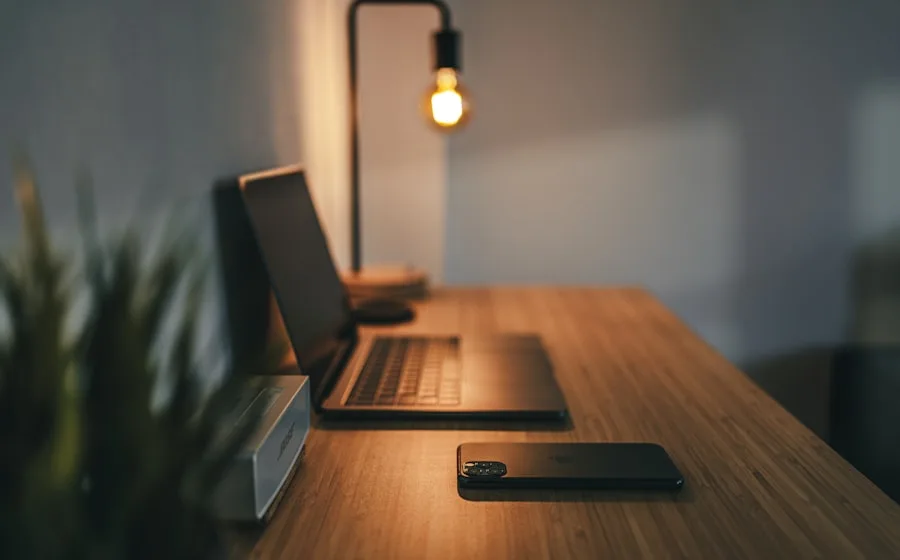
You don't need a full renovation. These 10 bedroom updates range from free habit changes to modest investments, and each one has real science behind it. Pick the ones that match your biggest sleep pain points and start there.
Top 10 Bedroom Updates at a Glance
Upgrade your mattress or mattress topper
Optimize your room temperature
Block out all light sources
Eliminate or mask disruptive noise
Replace your pillow for proper neck support
Declutter and simplify your sleep space
Switch to sleep-friendly lighting
Upgrade your bedding and sheets
Add a scent that promotes relaxation
Create a tech-free zone
1. Upgrade Your Mattress or Mattress Topper
Your mattress is the single most impactful piece of sleep infrastructure you own, and most people are sleeping on one that's past its prime. The average mattress has a lifespan of seven to ten years – after that, it loses its support structure in ways that affect spinal alignment and pressure point relief even if it doesn't look obviously worn out.
If a full mattress replacement isn't in the budget right now, a quality mattress topper is a legitimate bridge solution. A two- to three-inch memory foam or latex topper can meaningfully change the feel of a firm or aging mattress for $80–$200, which is a fraction of a full replacement. When you're ready to invest in a new mattress, focus on support and pressure relief for your sleep position rather than getting caught up in marketing terms like "cooling gel" or "hybrid" – the best mattress is the one that keeps your spine neutral and doesn't create pressure on your hips or shoulders.
Key benefit: Proper spinal alignment reduces overnight tossing and turning, which means lighter sleep stages get less interrupted.
Watch out for: Mattress toppers don't fix a severely broken or sunken mattress. If there's a visible dip or sag in your mattress, you need a replacement, not a topper on top of the problem.
2. Optimize Your Room Temperature
Most people sleep in rooms that are too warm. The body needs to drop its core temperature by one to two degrees Fahrenheit to initiate and maintain deep sleep – and a hot room fights that process all night long. Research consistently points to 65–68°F (18–20°C) as the optimal range for most adults, though individual preference varies slightly.
If you don't have full control over your thermostat, there are workarounds. A fan pointed at your bed increases airflow and evaporative cooling. Cooling mattress pads – like the Chilipad or BedJet – actively regulate surface temperature and are worth the investment if temperature is a significant issue. In cold climates, the goal isn't just warmth – it's keeping the room cool while staying warm under appropriate bedding, which means your blanket weight matters as much as your thermostat setting.
Key benefit: Falling asleep faster and spending more time in deep, restorative sleep stages.
Quick tip: If you sleep with a partner who runs at a different temperature, a dual-zone cooling/warming pad is one of the most relationship-preserving sleep investments you can make.
3. Block Out All Light Sources
Light is the most powerful external signal your brain uses to regulate its sleep-wake cycle. Even small amounts of light during sleep – a streetlight through thin curtains, an LED standby light, the glow of an alarm clock – can suppress melatonin production and reduce sleep quality without you ever fully waking up.
The fix is to get your bedroom as close to pitch black as possible. Blackout curtains are the highest-impact purchase here, blocking outside light from windows entirely. Look for curtains with a thermal lining – they block both light and temperature transfer, which supports the temperature optimization in tip #2. For room-internal light sources, cover LED indicators on devices with black electrical tape or remove them from the room entirely. If blackout curtains aren't practical (renting, room layout, cost), a sleep mask is a cheap and effective alternative – just make sure it fits without putting pressure on your eyes.
Key benefit: Uninterrupted melatonin production throughout the night means faster sleep onset and better sleep depth.
What to avoid: Thin curtains marketed as "room darkening" are not the same as blackout curtains. Read the actual light-blocking specs before buying.
4. Eliminate or Mask Disruptive Noise
Noise disrupts sleep in two ways: it can wake you up outright, or it can pull you into lighter sleep stages without full waking – the kind of disruption you don't remember but feel the next day. Traffic, neighbors, a snoring partner, early-morning birds, household sounds – all of these fragment sleep architecture in ways that leave you less rested despite a full night in bed.
White noise machines are the most reliable solution. They work by creating a consistent ambient sound that masks fluctuating noises before they register as disruptions. The Lectrofan and LectroFan Micro are well-regarded options that offer multiple sound profiles beyond just "white noise" – pink noise and brown noise have slightly different frequency distributions that some people find more natural and easier to sleep through. Box fans serve a similar function at lower cost if you also need airflow. For partner snoring specifically, earplugs remain one of the most underrated sleep tools – a quality foam or silicone pair can make a significant difference.
Key benefit: Fewer micro-awakenings and more time in slow-wave and REM sleep.
Quick tip: Start white noise at a volume just loud enough to mask the problem sounds – you don't need it loud to be effective, and lower volume is more sustainable long-term.
5. Replace Your Pillow for Proper Neck Support
Most people have had their pillow for longer than they should. Pillows typically need replacing every one to two years – they compress over time, lose their loft, and accumulate allergens including dust mites that affect breathing quality during sleep. Beyond age, the type of pillow matters: your sleep position determines what level of support your neck actually needs.
Side sleepers need a firm, higher-loft pillow to fill the gap between their shoulder and head. Back sleepers need a medium-loft pillow that keeps the head level with the spine without pushing it forward. Stomach sleepers – ideally a category to move away from for neck health reasons – need a very flat, soft pillow or none at all. Adjustable-fill pillows (usually shredded memory foam or latex) are a smart investment because you can add or remove fill to dial in exactly the support level you need, which eliminates the guesswork of buying a fixed-loft pillow blind.
Key benefit: Correct neck alignment eliminates overnight tension that causes morning stiffness and headaches.
What to avoid: Avoid pillows that are too soft across the board – a pillow that feels luxuriously plush in the store often provides no real support during sleep.
6. Declutter and Simplify Your Sleep Space
Your bedroom environment communicates information to your brain constantly, even when you're not consciously processing it. A room full of clutter – laundry on the chair, paperwork on the dresser, items that belong in other rooms – signals unfinished business and mild ambient stress that competes with the mental wind-down needed for quality sleep. Research published in the journal Sleep found a correlation between hoarding behavior and sleep disturbances, and even non-clinical clutter creates a version of this effect.
The goal isn't a minimalist showroom – it's a room where the primary association is rest. Remove anything that doesn't belong in a sleep environment: work materials, exercise equipment if possible, items that trigger to-do list thinking. Make your bed every morning not for aesthetics but because it signals environmental order that your brain picks up on when you return at night. If you have limited storage and can't fully declutter, containing items in closed storage (a dresser with drawers, boxes with lids) reduces the visual noise enough to make a difference.
Key benefit: A simplified sleep environment reduces ambient cognitive activation, making it easier to mentally transition into sleep mode.
7. Switch to Sleep-Friendly Lighting
The light in your bedroom in the one to two hours before sleep has a direct effect on how quickly you fall asleep and how well you sleep once you do. Standard overhead LED bulbs typically emit blue-spectrum light that suppresses melatonin in the same way sunlight does – which is great for waking up and terrible for winding down. The fix isn't complicated, but it does require intentionality.
Swap overhead lighting in your bedroom for warm-spectrum bulbs (2700K or lower color temperature) that emit amber-toned light matching candlelight or sunset frequencies. Smart bulbs like the Philips Hue or LIFX range make it easy to automate a dim, warm light setting that activates in the evening without manual adjustment. For reading before bed, a warm-toned lamp at low brightness is far less disruptive than reading under a bright overhead. If you use devices in bed – phone, tablet, e-reader – enable night mode, reduce brightness manually, and consider blue-light-blocking glasses for the pre-sleep window.
Key benefit: Supports natural melatonin production in the hour before sleep, improving both sleep onset speed and sleep depth.
Quick tip: The Kindle Paperwhite with its warm light setting is one of the most sleep-friendly ways to read before bed – far less disruptive than a tablet or backlit phone.
8. Upgrade Your Bedding and Sheets
Sheets and bedding affect sleep quality more than most people account for. Thread count is the most common metric people use, but it's actually not the most important factor – fiber type and weave structure matter more. Cotton percale is crisp and breathable, making it excellent for warm sleepers. Cotton sateen is softer and slightly warmer. Linen breathes exceptionally well and is ideal for hot climates or hot sleepers but has a rougher texture that takes some getting used to. Bamboo-derived fabrics offer natural temperature regulation and a smooth, soft feel that suits most sleep types.
Your duvet or comforter fill also matters for temperature regulation. Down is warm and compressible but can be too hot for warm sleepers and requires careful washing. Down-alternative fills are more temperature-neutral and easier to maintain. Weighted blankets (typically 10–20 lbs, or around 10% of body weight) have shown measurable benefits for people who struggle with anxiety-related sleep disruption, providing deep pressure stimulation that activates the parasympathetic nervous system. If temperature regulation is your primary concern, a breathable duvet paired with temperature-appropriate sheets will outperform expensive sheet sets paired with the wrong fill.
Key benefit: The right bedding reduces overnight temperature fluctuation and physical discomfort that causes waking and position shifting.
9. Add a Scent That Promotes Relaxation
Scent is the only sense with a direct neurological pathway to the limbic system – the brain's emotional and memory center – which is why certain smells can shift your mental state almost immediately. For sleep, lavender is the most studied and consistently supported option. Multiple clinical studies have found that lavender aromatherapy reduces sleep onset time, increases sleep duration, and improves reported sleep quality, particularly for people with mild insomnia or anxiety-related sleep difficulties.
The easiest implementation is a bedside essential oil diffuser with lavender oil running for 30–60 minutes before sleep. Alternatively, a few drops of lavender on your pillow or a linen spray applied to bedding creates a consistent scent association that your brain starts linking to sleep over time. Roman chamomile and bergamot are secondary options with supporting evidence if lavender isn't to your preference. Keep concentrations low – the goal is a subtle background scent, not a strong smell that becomes another sensory input to process.
Key benefit: Lavender aromatherapy is one of the few non-pharmaceutical sleep interventions with consistent clinical support for improving sleep quality without dependency risks.
What to avoid: Synthetic "relaxing" air fresheners and scented candles are not equivalent to essential oil aromatherapy and don't carry the same evidence base.
10. Create a Tech-Free Zone
This one is harder than the others, but it's worth doing. Phones, tablets, and televisions in the bedroom create three separate sleep problems: blue light emission that suppresses melatonin, psychological activation from content (news, social media, work notifications), and the habit of checking the device during nighttime awakenings – which turns a brief partial awakening into a fully alert episode that can last an hour or more.
The most effective version of this update is charging your phone outside the bedroom entirely and using a standalone alarm clock for wake-up. If that feels like too large a change, set a firm device cutoff time (30–60 minutes before sleep), switch to airplane mode to eliminate notifications, and place the phone face-down across the room so it's not a reflexive reach. Television in the bedroom is worth reconsidering entirely – the habit of falling asleep to TV creates a dependency on external stimulation for sleep onset that undermines natural sleep pressure over time. If falling asleep in silence feels uncomfortable at first, a white noise machine or audiobook at low volume is a far better substitute.
Key benefit: Eliminating phone and screen interaction in the pre-sleep window has one of the most reliable correlations with improved sleep onset and overnight sleep maintenance of any behavioral change.
Quick Takeaway
You don't need to implement all ten at once. The highest-impact, lowest-cost updates to start with are: blackout curtains or a sleep mask, room temperature adjustment, and a phone-out-of-bedroom rule. Those three changes alone address the most common and most fixable sleep disruptors for most people. Layer in the remaining updates over time as budget and habit allow, and track how you feel over two to four weeks – sleep improvement is gradual but cumulative.
FAQ
How long does it take to notice a difference after changing your sleep environment? Most environmental changes – temperature, darkness, noise masking – show effects within a few nights. Behavioral changes like removing devices take one to two weeks as your sleep patterns readjust. For mattress or pillow changes, give yourself two to four weeks to adapt to the new support level before deciding if it's working.
What's the single most impactful bedroom update for sleep quality? For most people it's either mattress quality or light elimination, depending on the current state of their setup. If your room isn't fully dark, blackout curtains tend to show the fastest, most noticeable improvement. If your mattress is more than eight years old, that's usually the larger underlying issue.
Is a white noise machine better than a fan for sleep noise? Both work well. A white noise machine gives you more control over volume and sound profile without the airflow or temperature effects of a fan, which is useful if you're in a cool room or don't want extra airflow. A fan does double duty on noise and air circulation, which makes it a better value option for warm sleepers.
Do weighted blankets work for everyone? Not universally. Weighted blankets are most consistently effective for people with anxiety-related sleep disruption, restlessness, or sensory processing sensitivities. People who already sleep comfortably and without anxiety-related sleep issues may not notice a significant difference. They're also not recommended for young children, people with respiratory or circulatory issues, or anyone who feels claustrophobic under pressure.
How important is pillow replacement compared to mattress replacement? Pillows are cheaper to replace and often overlooked – a new pillow is worth trying before committing to a full mattress upgrade. If neck pain, shoulder tension, or morning headaches are your primary symptoms, a pillow issue is more likely the culprit than a mattress issue. If the problem is lower back pain, hip pressure, or overall poor sleep quality without a specific physical complaint, the mattress is the more likely cause.
Can scent really improve sleep quality, or is that just wellness marketing? Lavender aromatherapy specifically has multiple randomized controlled trials supporting its effect on sleep quality – it's not just marketing. That said, the effect size is modest and it works best as one component of a broader sleep environment optimization rather than a standalone fix. It's not a substitute for addressing temperature, light, or noise issues, but it's a legitimate addition once the primary factors are covered.
Better sleep doesn't require a luxury bedroom renovation. It requires addressing the specific environmental factors that are disrupting your sleep, one step at a time. Start with the basics – darkness, temperature, noise – and build from there. Most of the biggest improvements are also the simplest and cheapest changes to make.
📚 Sources
National Sleep Foundation. What is the Best Temperature for Sleep? https://www.sleepfoundation.org/bedroom-environment/best-temperature-for-sleep
Harvard Health Publishing. Blue light has a dark side. https://www.health.harvard.edu/staying-healthy/blue-light-has-a-dark-side
Cho, J.R. et al. (2013). The effects of bedtime blue-light exposure on sleep quality. Sleep Medicine Research. https://www.ncbi.nlm.nih.gov/pmc/articles/PMC3786545/
Goel, N. et al. Lavender aromatherapy and sleep quality. Journal of Alternative and Complementary Medicine. https://www.ncbi.nlm.nih.gov/pmc/articles/PMC3230460/
Hvolby, A., & Bilenberg, N. (2011). Use of Ball Blanket in attention-deficit/hyperactivity disorder sleeping problems. Nordic Journal of Psychiatry. https://pubmed.ncbi.nlm.nih.gov/21241203/
Cai, D.J. et al. Sleep and memory consolidation. Nature. https://www.nature.com/articles/nature07204
Scullin, M.K. et al. (2019). The effects of bedtime writing on difficulty falling asleep. Experimental Brain Research. https://pubmed.ncbi.nlm.nih.gov/29058942/
National Sleep Foundation. Mattress Lifespan: When to Replace Your Mattress. https://www.sleepfoundation.org/mattress-information/when-to-replace-your-mattress
Porcheret, K. et al. (2015). Melatonin suppression by light at night. Journal of Biological Rhythms. https://pubmed.ncbi.nlm.nih.gov/26561373/
Troxel, W. et al. Sleep environment and health outcomes. RAND Corporation. https://www.rand.org/pubs/research_reports/RR1811.html